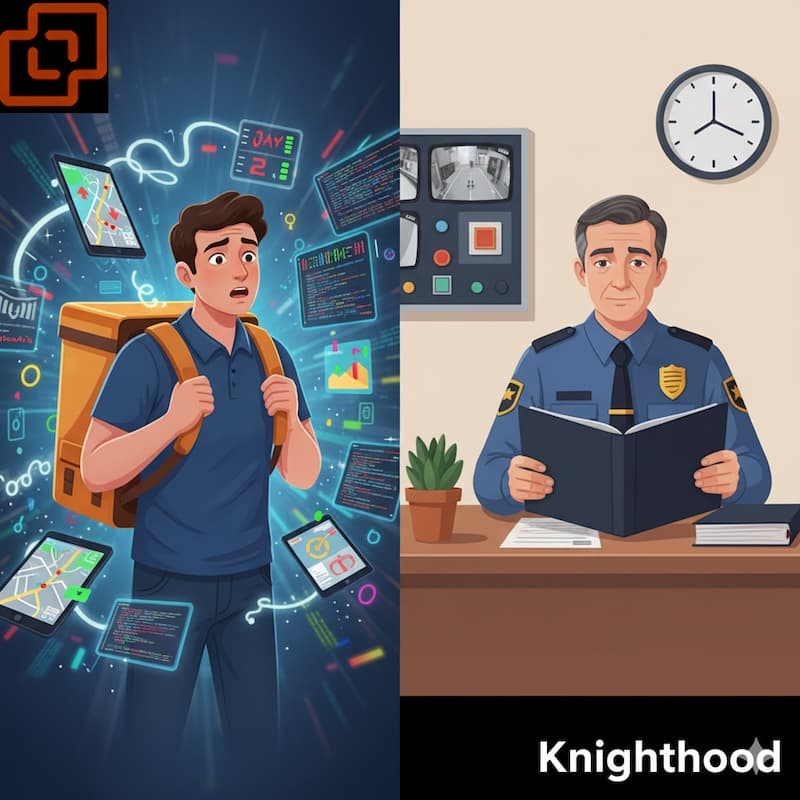
Continuous digital shifts exhaust India's gig workforce.
The Shift Back to Traditional Employment
Gig workers are returning to traditional employment because of algorithm fatigue. The mental cost of constant rule changes outweighs the flexibility of platform work. This trend appears in return interviews across our security and staffing operations.
Workers report that digital systems prioritize platform efficiency over worker well being. This creates a state of perpetual uncertainty. This exhaustion drives experienced labor back to predictable workforce partners.
Weekly Rule Changes
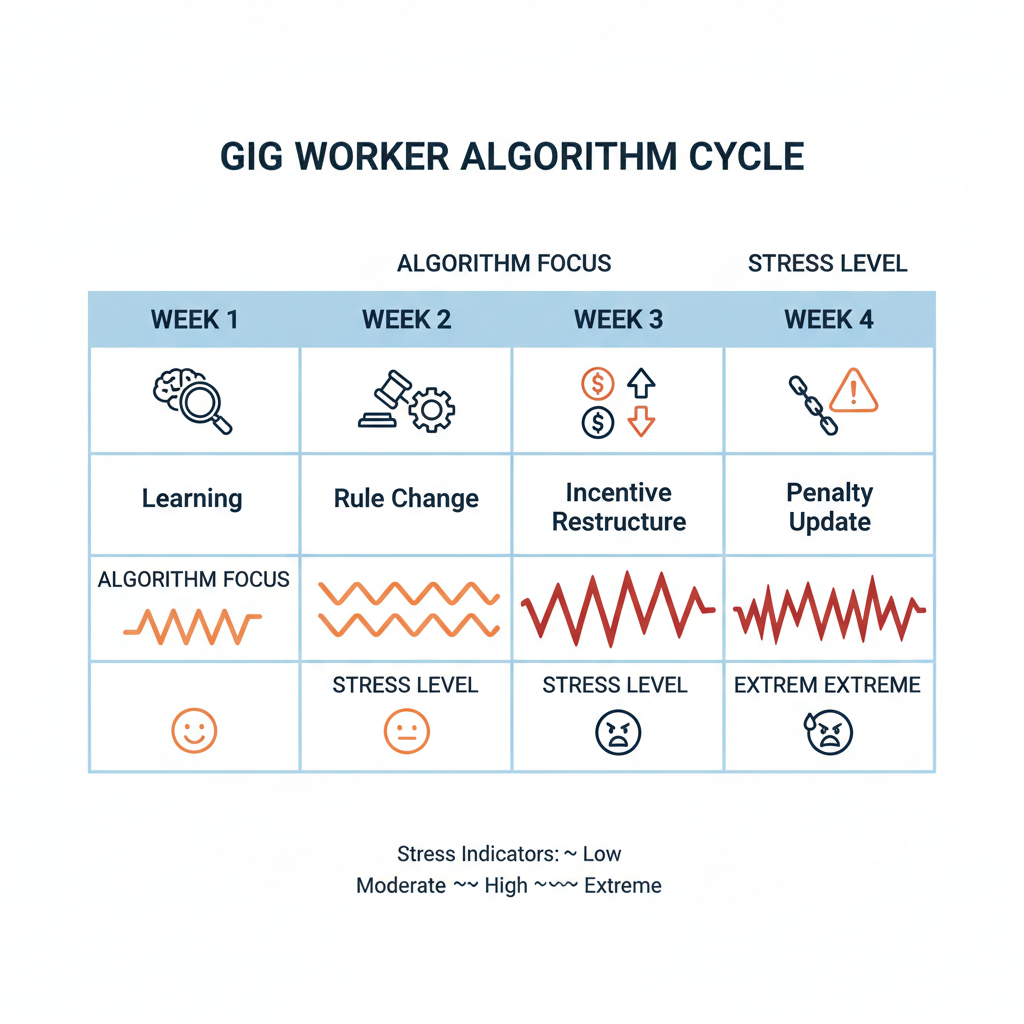
Platforms change their operational logic every week. Our research with returning workers shows a typical pattern of digital churn:
- Phase 1: Learning the Rules. Workers identify peak delivery hours and high-tip zones. They learn to trigger bonuses by completing specific order targets.
- Phase 2: The Algorithm Shift. App updates change order allocation. Previously profitable zones suddenly receive fewer orders. Earnings drop as the system redistributes the workload.
- Phase 3: Incentive Restructure. Surge pricing thresholds increase. A worker might need ten orders instead of eight to earn a ₹100 bonus.
- Phase 4: Acceptance Rate Penalties. New rules penalize order rejections. This forces workers to accept long-distance deliveries that yield no profit.
The Mental Cost of Constant Change
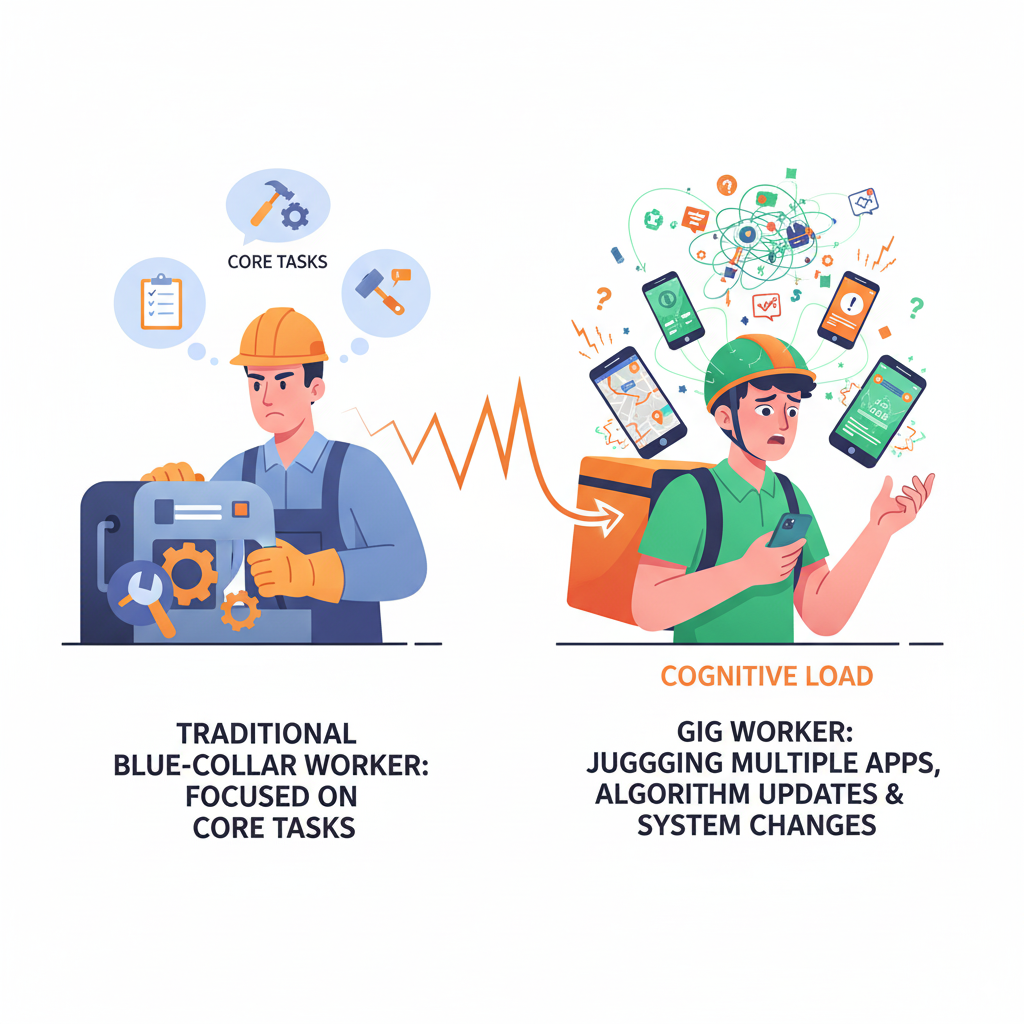
The psychological burden of algorithmic management is high. Continuous digital updates create three specific costs:
High Cognitive Burden
Workers spend significant energy understanding how to maximize their weekly earnings. This mental energy should go toward service quality and route efficiency. Instead, it gets lost in system navigation.
Learned Helplessness
Rules change faster than workers can master them. Many laborers begin to feel that their efforts do not matter. Expertise has a shelf life measured in weeks. This prevents workers from building long-term value.
Chronic Stress
The fear of missing an algorithm update creates stress. Workers spend their rest time checking forums and WhatsApp groups for news. This constant vigilance prevents true recovery between shifts.
Case Studies in Algorithm Fatigue
Case Study 1: The Loss of Earnings
A delivery worker spent eight months optimizing his behavior to earn ₹25,000 per month. A platform update changed the bonus structure and route logic. His monthly earnings dropped to ₹18,000 despite working the same hours. He returned to our warehouse operations for predictable pay and fair treatment.
Case Study 2: Obsolete Local Knowledge
A driver used his local knowledge of shortcuts and traffic patterns to increase efficiency. An algorithm update forced him to follow longer, predetermined routes. The app logic made his human expertise irrelevant. He joined our security team to use his skills in a stable environment.
Case Study 3: The Digital Barrier
A logistics coordinator left for a gig platform hoping for freedom. He soon felt like a robot managed by an app that ignored his human context. He returned as a customer service representative. He now works under human managers who understand exceptional circumstances.
The Performance Premium of Stability
Traditional employment offers high predictability. This stability is operationally valuable and psychologically essential. Knighthood provides the certainty that platform work lacks.
Traditional employment includes:
- Fixed Performance Metrics: Success criteria do not change weekly.
- Compound Expertise: Skills grow more valuable over time.
- Human Management: Real people exercise judgment during crises.
- Medical Security: Employees receive ESIC medical insurance for their families.
- Statutory Compliance: Reliable PF and bonus payments build financial stability.
The Knighthood Hybrid Model
We bridge the gap between gig flexibility and corporate stability. Our hybrid approach uses technology to enhance rather than replace human management.
- Flexible Evaluation Period: New workers start with flexible schedules. This allows us to evaluate their fit while they maintain income.
- Transparent Conversion: We provide clear criteria for moving to permanent roles. There are no hidden algorithms.
- Structured Progression: Successful workers move from guards to supervisors and coordinators.
- Human Layer: People manage all day-to-day interactions. Technology handles the data but humans make the decisions.
Demographics of Risk Tolerance
Our data are clear regarding risk tolerance across different worker groups. Single workers often trade stability for the chance of higher daily pay. They return to us when they experience the mental toll of gig work.
Married workers prioritize job security and family health coverage. They require a predictable income for planning. These workers avoid gig platforms because they cannot afford the risk of variable earnings.
The Business Case for Predictability
Operations managers must consider the hidden cost of algorithmic management. Constant rule changes create high turnover and recruitment costs. These "savings" from gig platforms are often illusory.
Traditional employment allows workers to build institutional knowledge. This compounds the value of your workforce over time. Stable systems reduce the cognitive load on staff. This leads to better performance and lower attrition.
Higher Standards Through Human Management
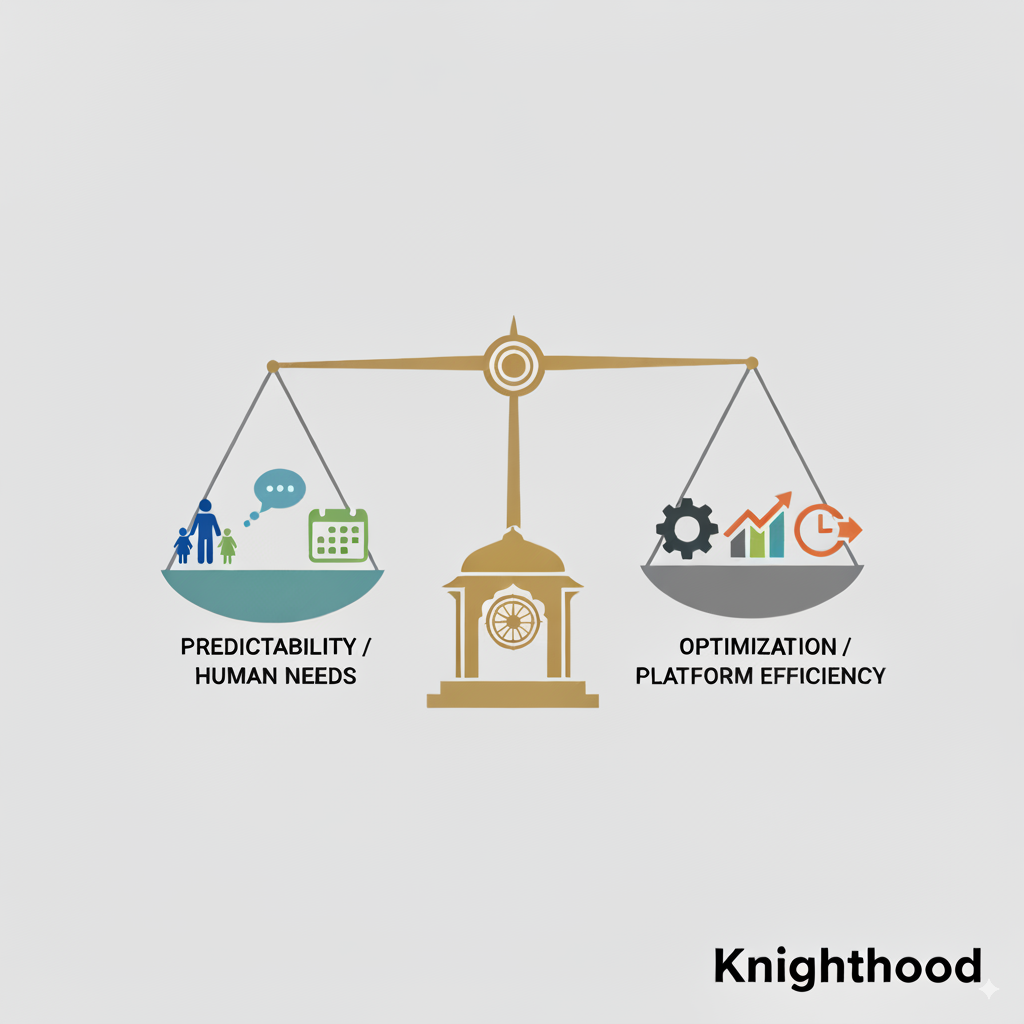
Algorithm fatigue is a warning for the future of work. As AI management expands, companies must balance efficiency with human psychological needs.
Knighthood chooses sustainable work over optimized work. We prioritize career development over income potential. The most effective workforce systems combine digital tools with human dignity.
Our experience shows that workers thrive under predictable systems. They choose human management because they want a career, not just a game to win. The future of work belongs to companies that understand this human requirement.