The Compliance Question Every Company Is Asking
Across India, businesses are trying to answer one deceptively simple question:
Are the new Labour Codes active yet?
- HR teams hear one thing from consultants.
- Vendors say something else.
- State notifications seem delayed.
The result is confusion—and in compliance, confusion is dangerous.
India’s four new Labour Codes represent the biggest structural overhaul of labour regulation in decades. They consolidate 29 central labour laws into four codes covering wages, industrial relations, social security, and occupational safety. But unlike past reforms, their implementation is not a single nationwide switch.
Some provisions are already reshaping liability. Others depend on state-level rules that are still evolving.
This article explains:
- Whether the new labour codes are applicable today
- What is already binding on employers
- What depends on state notifications
- Where companies are most exposed right now
- What smart employers are doing before enforcement tightens
Short Answer: The Labour Codes Are Not Fully Enforced—But They Are Not Dormant Either
The four Labour Codes are central legislation. They have been passed by Parliament and are law.
However, full operational enforcement depends on state governments issuing rules and notifications.
This creates a dual reality:
- Some changes are already structurally applicable across India
- Others will activate only when states notify implementation rules
Companies that treat this as “not applicable yet” risk being unprepared when enforcement begins.
The real risk is not sudden penalties—it is retrospective exposure created by outdated structures.
Why Implementation Is Split Between Center and States
Labour is a subject under India’s Concurrent List in the Constitution. This means:
- The Central Government defines the framework, principles, and liabilities
- State Governments define procedures, portals, thresholds, and enforcement mechanics
The Center has already:
- Enacted the four Labour Codes
- Issued draft central rules for implementation
- Defined uniform legal concepts like “wages” and “employee”
States must still:
- Notify their own rules
- Set minimum wage floors
- Activate digital compliance systems
- Train enforcement machinery
Until states notify, full enforcement pauses—but structural misalignment continues to accumulate risk.
The Most Critical Change Already Affecting Employers: The New Definition of “Wages”
The most consequential change under the new labour codes is the uniform definition of wages.
This applies across India, irrespective of state notification timelines.

What Is Included as Wages Now?
Under the new framework, “wages” include:
- Basic pay
- Dearness allowance
- Retaining allowance
Earlier, companies could design salary structures heavily tilted toward allowances. That flexibility has now been capped.
The 50% Rule Explained
If allowances and variable components exceed 50% of total remuneration, the excess amount is automatically reclassified as wages.
This directly affects:
- Provident Fund (PF) calculations
- Gratuity liability
- Leave encashment
- Pension contributions
- Compensation during termination or retrenchment
Why This Is Dangerous Even Without Enforcement
Many vendors and payroll systems have not updated wage structures. They are waiting for state enforcement.
That creates a silent gap:
- Payroll continues under old logic
- Liability is building under the new definition
When enforcement begins, adjustments are not forward-only.
They often reopen historical calculations.
Social Security Coverage Has Expanded—Quietly but Significantly
The Social Security Code widens the net of employer responsibility.
Nationwide ESIC Coverage
Previously, ESIC applied only in notified areas.
That geographical limitation has been removed.
Now:
- ESIC coverage is applicable across India
- The definition of employment injury has expanded
Commute Accidents Are Now Work-Related
Accidents occurring:
- While commuting to work
- Or returning from work
…are treated as occurring “in the course of employment.”
This increases:
- Reportable incidents
- Documentation requirements
- Claim exposure
For manpower-heavy businesses, this is a major operational shift.
Voluntary ESIC for Small Establishments
Establishments with fewer than 10 employees can now:
- Opt into ESIC voluntarily
- If employer and majority of employees consent
This blurs the line between “covered” and “not applicable” establishments.
Gig and Platform Workers: Recognized for the First Time
The new codes formally recognize:
- Gig workers
- Platform workers
They mandate the creation of social security schemes covering:
- Life and disability insurance
- Health benefits
- Maternity benefits
- Old-age protection
While many schemes are still being designed, legal recognition itself creates future compliance expectations, especially for contractors and aggregators.
Enforcement Has Changed—But Liability Has Not Reduced
The new labour codes replace the traditional inspector with an Inspector-cum-Facilitator.
This reflects a shift in philosophy:
- From pure punishment
- Toward guided compliance
Compounding of Offences
For certain offences:
- First-time violations can be compounded
- Settlements are allowed at 50–75% of the maximum fine
This reduces litigation—but not responsibility.
The Reality Employers Miss
Facilitation does not eliminate:
- Backdated recalculations
- Employee claims
- Principal employer liability
It only removes the excuse of ignorance.
Where Most Companies Are Already Exposed
If any of the following apply, exposure exists today, not later:
- Allowances exceed 50% of total pay
- Manpower or security staff deployed across multiple states
- Attendance and payroll managed manually or via spreadsheets
- Vendor cannot show revised wage structures in writing
- Contracts do not reflect updated statutory assumptions
These gaps do not trigger alarms immediately.
They surface during audits, disputes, or exits.
Why Waiting for State Notification Is a Risky Strategy
Many companies plan to “act once notified.”
That strategy fails because:
- Structural changes take time
- Vendor readiness lags behind legal change
- Data correction is harder than data preparation
When states notify:
- Enforcement timelines are short
- Documentation is demanded immediately
- Historical mismatches become visible
Preparation cannot be compressed into compliance windows.
What Proactive Employers Are Doing Now
Companies managing risk effectively are:
- Auditing wage structures against the 50% rule
- Freezing payroll logic to avoid drift
- Demanding revised breakups from vendors
- Reviewing attendance accuracy
- Mapping multi-state exposure

They are not overhauling systems prematurely.
They are making exposure visible.
The Question That Actually Matters
The right question is not:
“Are the new labour codes applicable yet?”
It is:
“If enforcement begins tomorrow, do our wage structures, vendor contracts, and attendance records survive scrutiny?”
For many businesses, the honest answer is no.
Final Takeaway
India’s new Labour Codes are neither fully active nor safely dormant. They are partially live, structurally binding, and evolving state by state.
Waiting is no longer neutral.It is a decision—with consequences.
Businesses that treat this period as preparation time will adjust calmly.
Those that wait for enforcement will adjust under pressure.
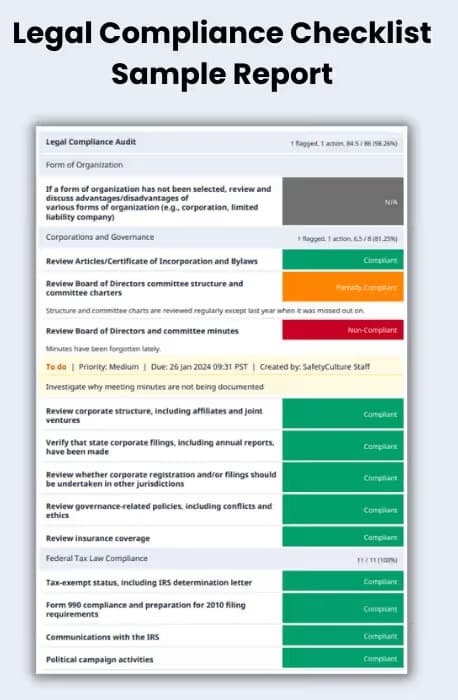
You can download our checklist to manage your multi-state manpower, payroll, and statutory compliance