
How to hire security guards in India
How to hire security guards in India — why guards matter beyond electronic security, the types available, what to check before you engage an agency, and what is specific to hiring in Delhi NCR, Mumbai, Bengaluru and Hyderabad.
By Knighthood Team
Published 7 May 2025
Updated 14 October 2026
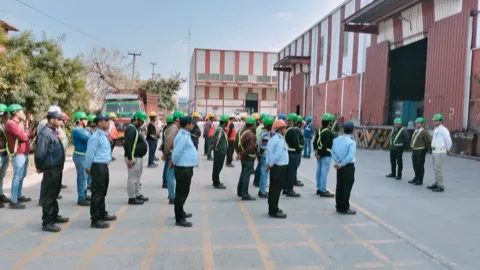
Electronic security — CCTV, alarms, access control — is effective but not foolproof. Criminals find ways around hardware. Guards add the human element that electronic systems cannot: they respond to alerts, deter opportunists by their presence, and handle the situations a camera only records. They also do the parts of security that are easy to forget — greeting visitors, watching for suspicious activity, helping in a fire or medical emergency.
This guide covers the decisions you make before you sign: what type of guard you need, what to check in an agency, and what varies by city.
Decide what you actually need
Start with the property and the risk, not with a price list.
- Residential — apartments, houses and gated communities usually need access control and perimeter security.
- Commercial — offices, retail and warehouses need entrance monitoring, theft deterrence and staff safety.
- Industrial — factories and construction sites need protection of equipment and controlled access.
- Events — concerts, conferences and weddings need crowd management and access control.
Then pick the guard type that fits: unarmed guards for most premises, armed guards for high-risk or high-value sites, mobile patrols for larger or multi-location coverage, and event guards for crowd control. The security guard types guide covers each in detail.
What to check in an agency before you hire
A guard is only as good as the agency behind them. Five checks matter more than the quoted price:
- Licensing — a valid PSARA licence for the state where the guards will be deployed. A licence in one state does not cover another.
- Compliance — the agency pays the current state minimum wage plus PF, ESI, bonus and gratuity, and can show proof of submissions. An itemised quote shows these as separate lines.
- Training — guards trained at recruitment and supervised by experienced people (ex-military or police background helps). Ask what the training actually covers: emergency response, access control, report writing, customer service.
- Cost — the build-up of wages, statutory costs and service charge, not a single bundled number. See what a security guard costs and the labour-cost calculator.
- Reporting and supervision — a named supervisor and a reporting system you can see, not just a roster.
The full process — including how to run the checks and the contract terms — is in how to choose a security agency.
What is different by city
The basics are the same, but the details change with each state’s minimum wages, PSARA licensing and market rates.
- Delhi NCR — the highest minimum wages in north India (unskilled around ₹18,456 per month, as at the current Delhi labour department notification). Ask for an itemised build-up; below-wage quotes are non-compliance. See our Delhi page.
- Mumbai — PSARA licensing under Maharashtra, with zone-based minimum wages (Mumbai/Pune in the highest zone). See Mumbai.
- Bengaluru — Karnataka revised its minimum wages sharply in 2026, putting Bengaluru’s unskilled floor among the highest in India, so budget accordingly. See Bengaluru.
- Hyderabad — Telangana PSARA licensing and state wage notifications. See Hyderabad.
The wage figures move with each state’s notification, so confirm the current rate for your state before budgeting — the labour-cost calculator applies the statutory build-up on your wage.
The bottom line
Hiring security guards in India comes down to three things: knowing what you need, verifying the agency’s licence and compliance, and comparing the cost build-up rather than the headline. Get those right and the guard on your gate will be the reliable kind. Get them wrong and the cheapest quote is the one that costs the most later.
If you are hiring now, send us the sites, shifts and roles you are budgeting for, and we will confirm the licence position and the compliant build-up for your city — contact us.
Frequently asked questions
How long does it take to deploy guards once I approve the contract?
For a straightforward site, allow one to two weeks: recruitment against the wage and skill level, verification of each candidate, induction training, uniform and the site-specific briefing. Large deployments or remote locations take longer. The schedule should be agreed before you sign, with the exact mobilisation date in the contract rather than promised over the phone.
Can I hire guards directly instead of going through an agency?
You can, and some employers do for a single small site. What you take on is the employer role: the state minimum wage, provident fund and ESI registration in your own name, bonus and gratuity, the registers, and the liability if any of it is wrong. For most businesses the agency’s service charge is smaller than the cost of running that in-house.
What documents should I ask for before signing?
The PSARA licence for the state, and evidence that the statutory returns are current — PF and ESI submissions for recent months, and an itemised quote showing wages, statutory costs and service charge as separate lines. Ask for the licence number and verify it against the issuing state’s record rather than accepting a photocopy.
What is a reasonable service charge for a guarding contract?
Expect the agency’s fee on top of wages and statutory costs rather than inside them, usually in the region of six to ten percent of the total. A quote far below that either has a component missing or is not paying the notified wage. Both turn into your problem later, as arrears or as a labour dispute on your site.
Do guards need to be trained, and who pays for it?
Training is the agency’s responsibility, and its cost belongs in the service charge. At minimum, ask what the induction covers — access control, emergency response, report writing, customer service — and how refresher training is handled. A provider that cannot describe its training content in specifics is supplying bodies, not a service.
What happens if a guard does not work out?
A written replacement clause is the answer: how soon a substitute is provided, at whose cost, how the outgoing officer is removed from site, and who covers the post in the gap. Get it in the contract before the first deployment, and check whether repeated replacement requests trigger a review of the recruitment and training rather than just another swap.
Send the requirement
If this post points at a decision you are close to making, send us the scope — sites, roles and shifts — and we will confirm the licence, supervision and commercial position for your situation.
Discuss your requirement